Concrete vs. Pavers: Understanding the Basics
When it comes to upgrading your outdoor spaces in Cleveland, the choice between concrete and pavers is one of the most important decisions you'll make. Both materials have earned their place in residential landscaping, but they work quite differently and offer distinct advantages depending on your needs, budget, and aesthetic preferences.
Concrete Driveways represent a single, monolithic surface poured and finished as one continuous layer. This traditional approach has been the go-to choice for decades because it's straightforward to install, relatively affordable, and provides a solid, reliable surface. Pavers, by contrast, are individual units (typically made from concrete, brick, or stone) that are laid side by side on a prepared base. Each paver is a separate piece, which means the overall surface is actually a collection of smaller elements fitted together.
Understanding these fundamental differences is crucial because they influence everything from installation time to long-term maintenance to how your driveway or patio will look and perform over the years. The climate in Cleveland, with its freeze-thaw cycles and variable weather patterns, also plays a significant role in which material might serve you better.
Durability and Weather Resistance in Cleveland's Climate
Cleveland's winters are notoriously harsh, with freeze-thaw cycles that can be particularly damaging to outdoor surfaces. When water seeps into concrete and then freezes, it expands, creating cracks and spalling (surface deterioration). A properly sealed and well-maintained concrete surface can withstand these conditions for 25 to 40 years, but poor installation or inadequate maintenance can significantly shorten that lifespan. This is why professional installation and regular sealing are essential for concrete surfaces in our region.
Pavers handle freeze-thaw cycles differently because they're individual units that can shift slightly without cracking. If one paver is damaged, you can replace just that single unit rather than patching an entire surface. However, pavers require a stable base and proper drainage to prevent settling and shifting over time. The joints between pavers can also accumulate debris and allow water infiltration if not properly maintained. Both materials need attention in Cleveland's climate, but they require different types of care.
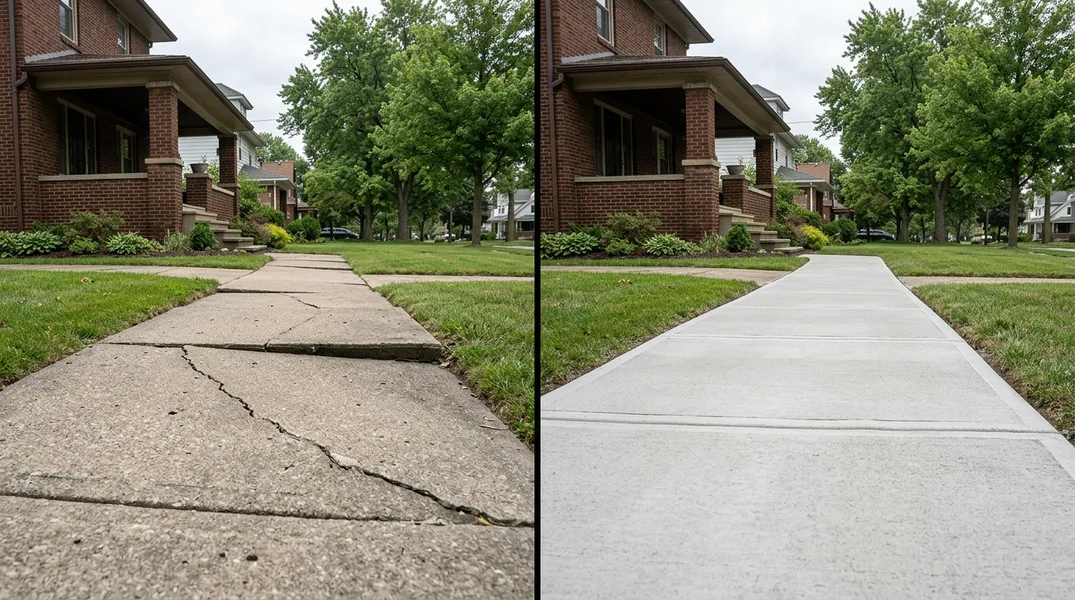
For homeowners considering Concrete Patios, the durability question often comes down to installation quality and maintenance commitment. A concrete patio installed by experienced professionals and sealed regularly can provide decades of reliable service. If you're uncertain whether your existing concrete can be restored rather than replaced, Concrete Repair & Resurfacing might be a cost-effective option worth exploring before committing to a complete replacement.
Design Options and Aesthetic Appeal
One of the most exciting developments in concrete has been the rise of decorative options that rival the visual appeal of pavers. Stamped & Decorative Concrete can be designed to look like brick, stone, slate, or virtually any pattern you imagine. Stamped concrete is applied to the surface before the concrete fully cures, creating texture and pattern that's integral to the material itself. You can also add color with concrete dyes or stains, giving you virtually unlimited design possibilities.
Pavers offer their own aesthetic advantages, particularly if you want a more traditional or rustic appearance. Because each paver is a distinct unit, you have flexibility in laying patterns (herringbone, running bond, basketweave, etc.), and you can mix different colors and textures within a single surface. This modularity appeals to homeowners who want a more varied, handcrafted look. The individual units also create visible grout lines that some people find attractive and others find less refined than a seamless concrete surface.
When considering backyard concrete ideas, the design possibilities with modern concrete are genuinely impressive. You can create elegant, sophisticated outdoor spaces that look custom-designed, and you're not limited to gray. Consider your home's architectural style, your neighborhood aesthetic, and your personal preferences when weighing these visual options. Both materials can look stunning when designed and installed properly.
Maintenance Requirements and Long-Term Care
Concrete surfaces require regular maintenance to perform optimally over their lifespan. Sealing is the most important maintenance task, as it protects the concrete from water infiltration, salt damage, and UV fading. In Cleveland's climate, you should plan to reseal concrete every two to three years, depending on traffic and weather exposure. Beyond sealing, concrete needs regular cleaning and prompt attention to any cracks that develop. Small cracks can be sealed with concrete caulk to prevent water from entering and causing further damage.
Pavers require different maintenance. The most important task is maintaining the joints between pavers, which typically contain polymeric sand or traditional sand. Over time, this material can wash away or compact, allowing the pavers to shift. You may need to refill joints periodically and occasionally reset pavers that have settled unevenly. Pavers also benefit from sealing, though it's less critical than with concrete. The individual nature of pavers means that if one becomes damaged, you can replace just that unit without affecting the rest of the surface.
Both materials benefit from regular cleaning to remove dirt, leaves, and debris. Pressure washing can be effective but must be done carefully to avoid damaging the surface. If you're not comfortable with maintenance tasks or prefer a more hands-off approach, concrete might be the simpler choice. If you enjoy the flexibility of replacing individual elements and don't mind more frequent maintenance, pavers could be a good fit. When you're ready to discuss your specific needs and maintenance preferences, reach out to Cleveland Concrete at (216) 483-2906 for professional guidance.
Cost Comparison: Concrete vs. Pavers in Cleveland
When evaluating pricing for these two materials, it's important to consider both initial installation costs and long-term expenses. Standard concrete typically costs less to install than pavers, often ranging from $8 to $15 per square foot for basic installation. Decorative options like stamped concrete or stained concrete will cost more, typically $12 to $25 per square foot, but remain competitive with paver pricing.
Pavers generally have higher upfront costs, typically ranging from $15 to $30 per square foot depending on the material quality and pattern complexity. This higher initial investment reflects the labor-intensive installation process and the individual cost of each paver unit. However, the ability to replace individual pavers can reduce long-term repair costs if damage occurs. You also need to factor in the cost of sealing and maintenance for both materials over time.
The real cost picture emerges when you consider the complete lifecycle of the surface. Concrete requires regular sealing (every 2 to 3 years) and occasional crack repair, but major repairs are typically less expensive than replacing multiple pavers. Pavers might cost more initially but could have lower repair costs if individual units fail. For homeowners in Cleveland looking to make an informed decision about their budget, Cleveland Concrete can provide a detailed free estimate that breaks down all costs associated with your specific project.
Which Material Is Right for Your Cleveland Home?
Choosing between concrete and pavers ultimately depends on your priorities, budget, and how you plan to use the space. If you want maximum design flexibility with decorative options, value simplicity in maintenance, and prefer a seamless appearance, concrete is an excellent choice. Modern stamped and stained concrete can achieve virtually any aesthetic you're imagining, and it provides a durable, low-maintenance surface when properly installed and maintained.
If you prefer a more traditional or rustic appearance, enjoy the modularity of individual units, and don't mind more hands-on maintenance, pavers might be the better fit. Pavers also offer the advantage of being replaceable in sections, which can be valuable if you have localized damage. They also provide excellent drainage in areas where water management is a concern.
The climate in Cleveland favors both materials when they're installed correctly and maintained properly. Your choice should reflect your lifestyle, aesthetic preferences, budget constraints, and willingness to maintain the surface over time. Cleveland Concrete specializes in both concrete and can guide you through this decision with expertise based on years of local experience. Whether you're interested in Concrete Driveways, Concrete Patios, or exploring Stamped & Decorative Concrete options, contact us today at (216) 483-2906 to discuss your project and get professional recommendations tailored to your specific situation.
Looking for a professional tree service in Cleveland? Cleveland Concrete responds fast for all your concrete needs.
Get a Free QuoteOur services: Concrete Driveways · Concrete Patios · Stamped & Decorative Concrete