Understanding Cleveland's Unique Soil and Climate Challenges
If you own a home in Cleveland, you already know that our region experiences four distinct seasons, significant freeze-thaw cycles, and proximity to Lake Erie creates moisture-heavy conditions year-round. What many homeowners don't realize is that these environmental factors directly impact the longevity and performance of concrete surfaces on their properties. The geological makeup of the Greater Cleveland area is heavily influenced by glacial deposits, particularly glacial clay, which presents specific challenges that contractors in warmer or drier climates rarely encounter.
Glacial clay is a fine-grained sediment left behind by retreating glaciers thousands of years ago. This soil type is expansive, meaning it absorbs and releases moisture seasonally, causing it to swell and contract. When your Concrete Driveways are poured directly on or near glacial clay, the soil's movement can create stress on the concrete foundation. Combined with Lake Erie's moderating effect on our climate, which keeps humidity levels consistently high, the concrete in Cleveland faces relentless moisture exposure. This is why working with a local contractor who understands these regional conditions is essential for ensuring your investment lasts.
The Freeze-Thaw Cycle and Its Impact on Concrete
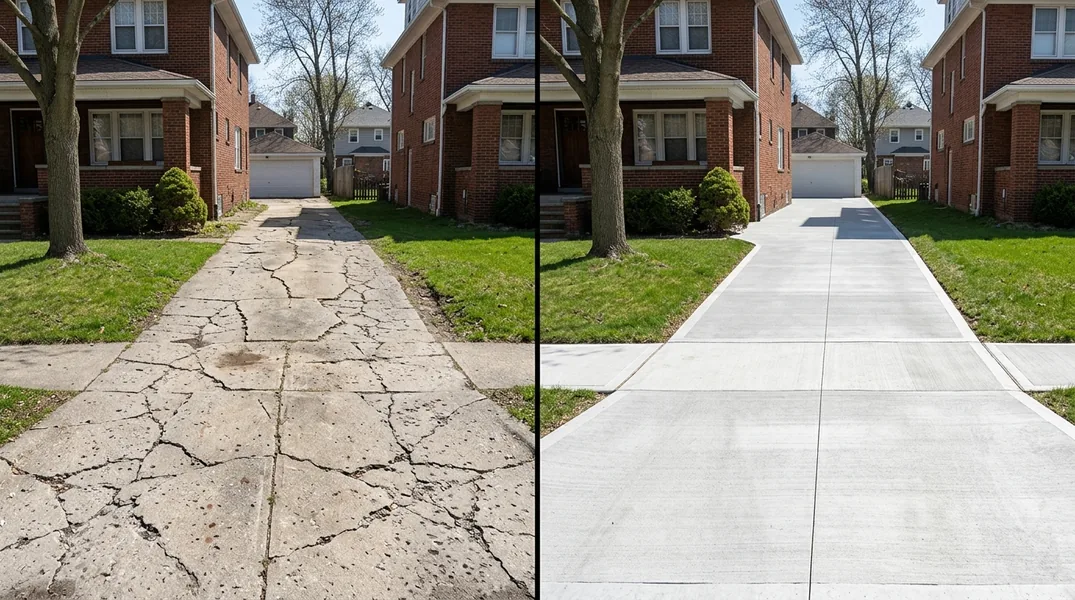
Cleveland experiences an average of 50 to 60 freeze-thaw cycles each winter, which is significantly higher than many other parts of the United States. A freeze-thaw cycle occurs when water penetrates concrete, freezes, expands, and then thaws repeatedly throughout the season. This expansion and contraction creates internal stress within the concrete, leading to cracking, spalling (surface deterioration), and eventual structural failure if left unaddressed. Homeowners often notice these problems appearing as small cracks in late winter or early spring, which can quickly develop into larger, more expensive issues.
The reason freeze-thaw damage is so prevalent in our region relates directly to the combination of our climate and soil conditions. Glacial clay retains moisture exceptionally well, meaning water is continuously available to seep into any microscopic openings in your concrete. When temperatures drop below freezing, this trapped water expands with tremendous force. Proper concrete installation, including adequate air entrainment (tiny air bubbles intentionally added to the mix) and appropriate sealing, can significantly reduce freeze-thaw damage. This is why choosing an experienced local contractor for Concrete Driveways installation and maintenance is a critical investment in protecting your property.
Lake Erie Moisture and Salt Exposure
Living near Lake Erie brings undeniable benefits, but it also means your concrete surfaces are exposed to higher moisture levels and, during winter months, significant salt application. Road salt, sidewalk salt, and deicer products are essential for safety during icy conditions, but they accelerate concrete deterioration through a process called salt scaling. Salt penetrates concrete pores, draws out moisture, and causes the surface layer to flake and peel away. In Cleveland and surrounding areas like Lakewood, where salt use is heavy, this damage is a common sight by mid-winter.
Beyond salt scaling, the high humidity from Lake Erie creates an environment where moisture continuously moves through your concrete. This moisture carries dissolved minerals and contaminants that can stain surfaces and weaken the concrete's internal structure over time. Additionally, the lake effect can create dramatic temperature swings, especially in late fall and early spring, which intensifies freeze-thaw stress. Proper sealing and regular maintenance become non-negotiable for protecting your Concrete Driveways and other concrete features. If you're noticing signs of salt damage or deterioration, contact Cleveland Concrete for a professional assessment and Concrete Repair and Resurfacing options.
Concrete Driveway Cost in Cleveland: What to Budget
When homeowners research pricing for concrete driveway installation, they often find significant price variations between regions. Concrete driveway cost in Cleveland reflects the specialized requirements our climate and soil conditions demand. You cannot simply apply national averages to our local market. Regional factors like glacial clay soil preparation, enhanced air entrainment in the concrete mix, proper drainage installation, and site-specific grading all influence final pricing. A qualified local contractor will account for these variables in their estimate, ensuring the driveway is built to withstand Cleveland's harsh conditions.
Beyond initial installation, budgeting for long-term maintenance is equally important. Homeowners in Cleveland should plan for professional sealing every two to three years, especially in areas exposed to heavy salt use. This preventive investment significantly extends your driveway's lifespan and prevents costly Concrete Repair and Resurfacing work down the road. To get an accurate quote tailored to your property's specific conditions, call Cleveland Concrete at (216) 483-2906 or request a free estimate online. Our team will evaluate your soil, drainage, and exposure to provide realistic pricing and timeline expectations.
Best Practices for Concrete Installation in Cleveland Conditions
Professional concrete contractors serving Cleveland understand that standard installation methods used in other regions simply won't deliver the durability homeowners need here. Proper site preparation begins with addressing the glacial clay foundation. This often involves removing problematic soil, installing a compacted gravel base, and ensuring excellent drainage to prevent water from pooling beneath the driveway. The concrete mix itself must be specifically designed for our climate, with adequate air entrainment to resist freeze-thaw damage and a lower water-cement ratio to minimize moisture absorption.
Finishing and sealing are equally critical. A well-finished concrete surface sheds water more effectively, reducing the amount that penetrates the concrete. Professional sealing should be applied after the concrete has fully cured, typically 28 days after installation. Quality sealers create a protective barrier against salt, moisture, and UV damage. Homeowners should also consider the orientation and slope of their driveway to ensure proper drainage away from the foundation. If you're planning a new driveway or need to replace an existing one, working with Cleveland Concrete ensures these best practices are applied throughout the entire project.
Maintaining Your Concrete Driveway Through Cleveland Winters
Once your Concrete Driveway is installed, ongoing maintenance becomes your responsibility as a homeowner. During winter months, avoid using rock salt directly on concrete whenever possible. Instead, opt for calcium chloride or magnesium chloride products, which are less damaging to concrete while still providing adequate de-icing performance. Shovel snow and ice promptly to minimize the time water sits on the surface. If you must use salt, apply it sparingly and rinse the driveway with fresh water when temperatures rise above freezing to remove salt residue.
Spring and fall are ideal times for professional inspection and maintenance. Look for small cracks, spalling, or discoloration that might indicate early damage. Addressing these issues promptly through professional Concrete Repair and Resurfacing can prevent more extensive problems. Regular sealing, typically every two to three years, is your best defense against Cleveland's moisture and salt exposure. If you notice significant deterioration or are unsure about your driveway's condition, call Cleveland Concrete at (216) 483-2906 to schedule a professional evaluation. Our team can recommend the most cost-effective maintenance strategy for your specific situation.
Looking for a professional tree service in Cleveland? Cleveland Concrete responds fast for all your concrete needs.
Get a Free QuoteOur services: Concrete Driveways · Concrete Patios · Stamped & Decorative Concrete